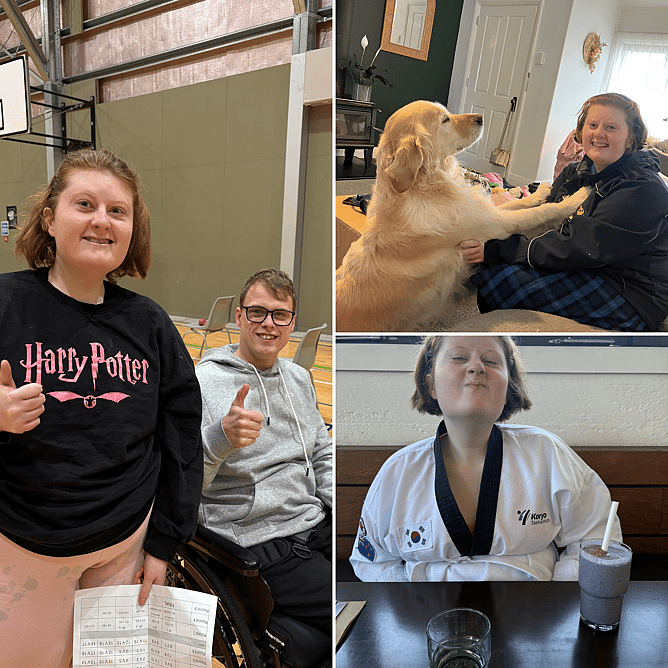
Amy: Finding Friendship, Confidence and Fun Through Sport
For 17-year-old Amy, sport is about much more than being active. It is about friendship, trying new things, building confidence and, most importantly, having a place where she can be herself.
Amy lives in Hawke’s Bay with her mum, Laura, and their beloved cat and dog. Laura describes Amy as funny, silly and caring, while Amy says that she loves Lego, colouring, puzzles, diamond dots and getting involved in all sorts of activities.
Amy has Prader-Willi Syndrome, a rare genetic condition she was diagnosed with when she was just 11 days old. Growing up with a disability has not always been easy, and mainstream schooling became increasingly difficult for her. After finishing school this year, Amy and her mum are now looking ahead to the next stage of her life and what adulthood might look like, just like all families with rangatahi in this age bracket.
One thing that has remained constant throughout Amy’s life is her love of being involved and giving things a go.
Finding her place through sport
Amy has always enjoyed participating in sport and P.E., but there have sometimes been barriers that made it difficult for her to be fully involved.
Through Disability Sport and Recreation Hawke’s Bay, Amy has found opportunities to continue being active, try new sports and develop her skills in an environment where she feels accepted and supported.
She currently takes part in swimming and boccia, and is keen to try even more. When asked what she enjoys most about being involved in sport, her answer is simple:
“I like to see all my friends, that’s the best part.”
For Amy, DSRHB has provided a community where she feels comfortable being herself. Laura says that DSRHB has given Amy a place where she feels accepted and where her individual needs are understood.
“DSRHB’s offerings have meant that Amy has community. It’s a place she can go where she is accepted and authentically herself.
“It also helps keep her physically active and well, and to feel a sense of accomplishment and pride as her skill and ability grows.”
Growing stronger and more confident
Being involved in sport has helped Amy both physically and socially.
“I feel stronger and it helps me be healthier. It helps me to meet people and be around people like me.”
She has already had some fantastic achievements along the way.
One of her proudest moments came at a boccia tournament, where she finished second. She is also rightfully proud to be a leader in swimming.
For Laura, seeing Amy experience these achievements has been incredibly meaningful.
“I am grateful to be able to take Amy to events where I know she is understood and her specific needs are accommodated. One of the biggest fears a parent has is that their child will be lonely or unhappy. DSRHB alleviates some of those fears for me.”
Looking towards the future
Amy has plenty of goals for the future, and she isn't short of ambition.
She wants to perfect the butterfly in swimming, become even more awesome at boccia and earn a black belt in Taekwondo.
She also has a very big-hearted dream outside of sport: looking after animals that have been abandoned and adopting lots of them.
As she moves into adulthood, having access to activities, friendships and opportunities to be active is an important part of helping Amy build the happy and fulfilling life she deserves.
For Laura, DSRHB has also provided reassurance that Amy has opportunities to be part of her wider community.
“I feel more confident that Amy can have a full and happy life with the activities and supports available in the wider community. It takes some pressure off my shoulders in finding ways to keep her fit and active, and generate social opportunities for her.”
Just come and have fun
Amy knows that trying something new can sometimes feel scary and daunting.
She understands that some activities can look difficult and that people with disabilities may worry about whether they will be able to participate.
Her advice to other young people with disabilities who might be thinking about getting involved in sport is concise and accurate:
“Just come and have fun. It is fun even if you aren’t very good or are shy.”
That attitude captures so much of what sport can offer. You don't have to be the fastest, strongest or most experienced person in the room. You just need an opportunity to participate, learn, make friends and discover what you can do.
Amy's journey is a great example of what can happen when those opportunities are available.
Everyone should have the opportunity to experience the joy of sport, recreation and community. Whether you're trying a sport for the first time, developing new skills or simply looking for somewhere to meet people and have fun, there is a place for you.
And if Amy's story teaches us anything, it's this: